What Type of Shaft Collar Should I Use?

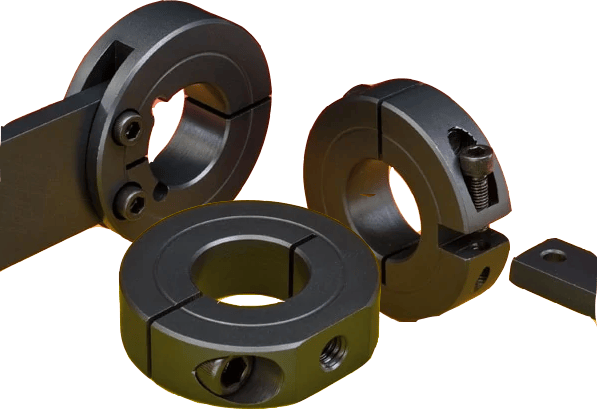
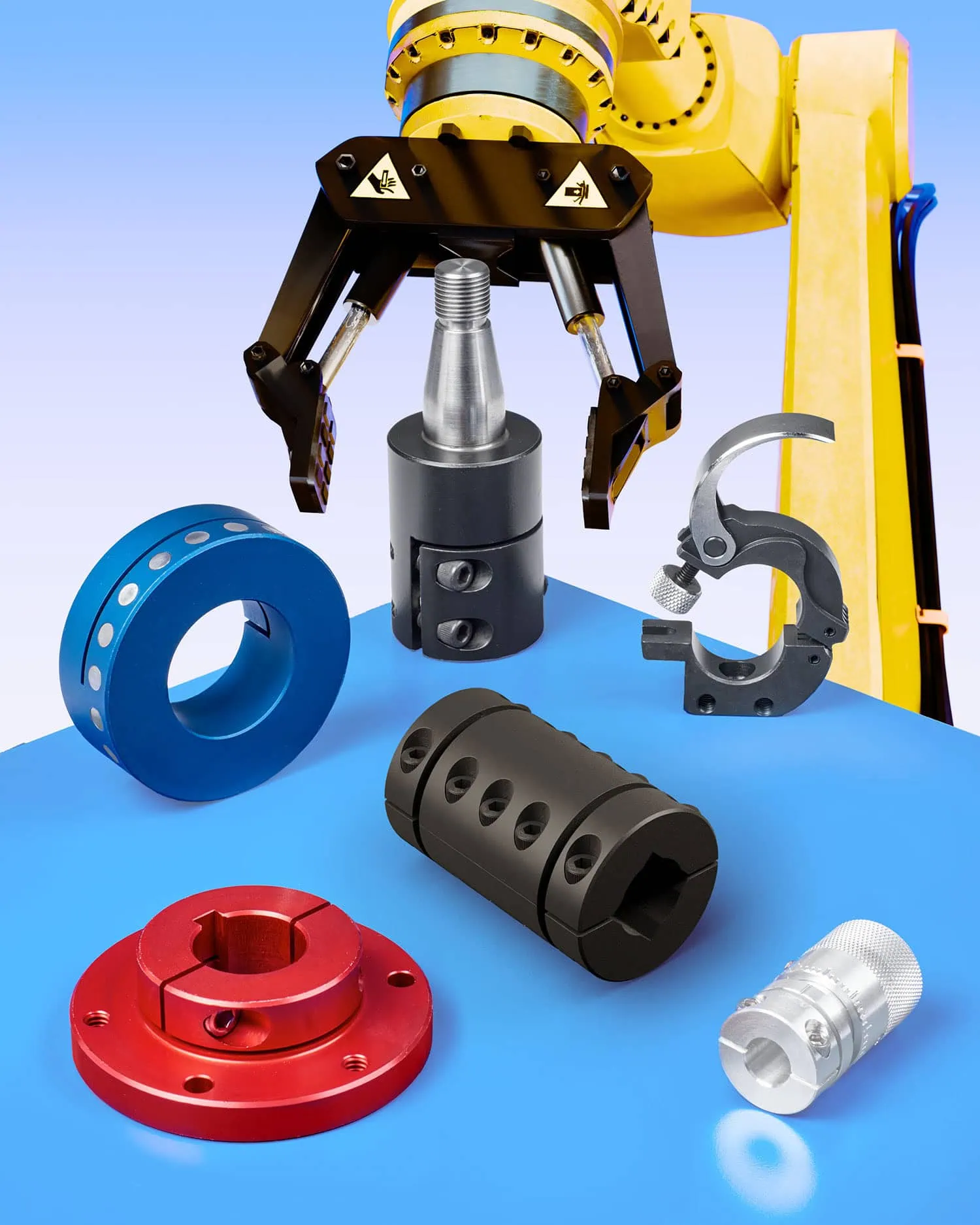
Shaft collars are simple, versatile components that are commonly used as mechanical stops or to fix components in place on a shaft. They can also be used for spacing or aligning other components. Shaft collars find applications in everything from gearbox assemblies to medical instruments to flagpoles; wherever there is a need to keep mechanical parts in place. However, since they are used so widely and are available in so many varieties, it can be difficult to identify which shaft collar is right for your application.

Shaft collars differ in key variables such as material, holding power, and surface treatment, so it’s critical to check that the type you choose aligns with your specifications to ensure efficiency and effectiveness for your application. In this guide, we’ll cover the key factors that should influence your choice of shaft collar to make sure you choose the right one for your needs.

Surface Finish

Shaft collars are most frequently made from steel. Steel shaft collars often receive a surface finishing treatment to enhance their holding power or corrosion resistance. Although there are multiple finishing options for shaft collars, the two primary options include oven-blackened and zinc plating.

An oven-blackened finish is a non-slip option designed to increase friction and decrease slippage between the shaft collar and the shaft, making it the ideal surface finish for enhancing holding power. In applications exposed to moisture, rust is a primary concern as it can compromise component longevity. Zinc plating offers greater corrosion resistance, making it ideal for this type of application; however, this smooth plating reduces friction, decreasing holding power.

Face-to-Bore Perpendicularity

Another key performance consideration is face-to-bore perpendicularity, which refers to the angle between the face of the collar and its bore. This measurement is important in load-bearing applications because a high degree of perpendicularity ensures that pressure is applied evenly across the interface between the collar and the shaft. Deviation from a 90-degree angle can lead to slippage or even premature component failure.

Face-to-bore perpendicularity is more important in certain applications than others, although extreme deviations are never desirable. When shaft collars are used to align components or used for heavy load-bearing, it’s especially important that the bore be as close to perpendicular with the face as possible.

Material

Just as surface finish is an essential factor in shaft collar selection, so is material. The most common material options are steel, stainless steel, and aluminum. Although steel is stronger and tends to offer better holding power, aluminum is lighter and has a favorable strength-to-weight ratio. As such, the choice primarily depends on two factors: corrosion-resistance and strength.

If corrosion resistance is a primary goal, then stainless steel or treated steel is a better choice than aluminum. On the other hand, aluminum is a better option if weight is a primary consideration.

Other material options include titanium and plastic. Titanium is lightweight, extremely strong, and temperature resistant; however, it is only used in applications requiring these attributes due its extremely high cost. Plastic shaft collars are very affordable and lightweight but offer much lower holding power.

The experts at Stafford can help you identify which material will offer the best performance in your application.

Stafford Shaft Collars

Stafford manufactures quality shaft collars, couplings, and other unique components for a variety of applications across many industries. With our knowledge, expertise, and broad range of product offerings, we can help you choose the right shaft collar for your needs. For more information, or to get started on your shaft collar solution, contact Stafford today.

Frequently Asked Questions

What is the primary difference between set screw and clamp-style shaft collars?

Set screw collars create permanent indentations on the shaft surface, while clamp-style collars distribute pressure evenly without damaging the shaft and can be easily repositioned. Stafford Manufacturing offers both styles to accommodate different performance and application needs.

How do I determine which holding power class I need?

Choose based on application requirements:

  • Ultra/Very Low-Profile for instruments and sensors
  • Low-Profile/High-Strength for general use
  • Heavy-Duty for mining and construction
  • Ultra Heavy-Duty for maximum force requirements.

Stafford Manufacturing provides a range of holding power options to match these varying demands.

Should I choose oven-blackened or zinc-plated finish?

Use an oven-blackened finish for maximum holding power and zinc plating for corrosion resistance in moisture-exposed environments. Stafford Manufacturing can help recommend the best finish based on your operating conditions.

When is face-to-bore perpendicularity most critical?

Face-to-bore perpendicularity is essential in load-bearing applications and precise component alignment, ensuring even pressure distribution and preventing slippage or premature failure.

What are the advantages of two-piece and hinged collars?

Two-piece and hinged collars can be installed anywhere on the shaft without removing other components. Hinged designs remain connected, reducing the risk of lost parts and simplifying installation—features commonly leveraged in Stafford Manufacturing designs.